Canva KDP Cover Templates: Design Professional Book Covers in Seconds
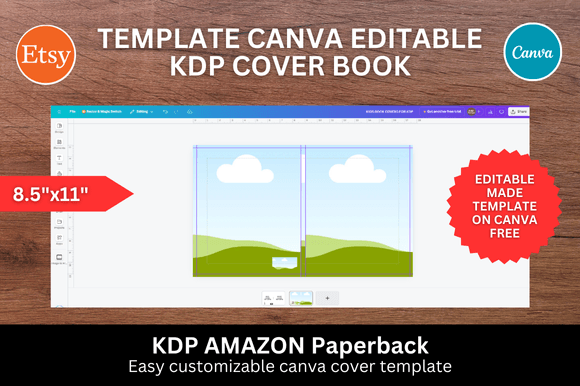
Creating a professional book cover for Amazon KDP doesn't have to drain your budget or eat up your weekends. If you've ever stared at a blank design canvas wondering where to start, Canva KDP Cover Templates offer a practical shortcut that respects both your time and creative vision. These templates are specifically built for the 8.5x11 inch journal and book cover format, giving you a structured starting point that meets Amazon's exact specifications without the guesswork.
What Makes These Templates Different From Generic Design Resources
Most cover templates floating around the internet are either too rigid or too complicated. Canva KDP Cover Templates strike a middle ground. They arrive as editable files inside Canva's free platform, which means you don't need expensive software like Adobe InDesign or Illustrator. You upload your images, drag and drop them into the designated areas, adjust colors and text, and export a print-ready file. The entire process can take minutes rather than hours.
The visual style of these templates tends toward clean, modern design with balanced compositions. They aren't overly ornate or cluttered, which actually works in your favor. A well-structured template gives you breathing room to add your own personality without fighting against aggressive design elements. Whether you're creating a lined journal, a planner, a kids' activity book, or a niche notebook, the templates provide enough flexibility to adapt to different themes and audiences.
What stands out about the Canva KDP Cover Templates approach is how it treats the designer's workflow. Instead of presenting a finished product you can't modify, each template functions as a design framework. You can swap out background images, change typography, adjust the color palette, and reposition elements. This matters because your cover needs to reflect the content inside the book and appeal to your specific target reader.
Who Benefits Most From Using Canva KDP Cover Templates
Small business owners creating branded journals or planners for their clients will find these templates especially useful. Instead of commissioning a designer for every new product, you can maintain visual consistency across a product line by using templates as your foundation. Entrepreneurs launching low-content books on Amazon—think gratitude journals, fitness trackers, recipe notebooks, or budget planners—can test different cover concepts quickly without investing heavily in each one.
Bloggers and content creators expanding into physical products represent another ideal user group. If you already have a visual brand identity established through your website or social media graphics, you can adapt the templates to match your existing aesthetic. The drag-and-drop functionality in Canva makes it straightforward to incorporate your brand colors, logos, and photography style into the cover design.
Crafters and hobbyists who want to create personalized gifts or small-batch products also benefit. You might design a custom notebook for a wedding, a family reunion journal, or a themed planner for your book club. The 8.5x11 inch dimension is a standard size that prints well through KDP, and having a template that already accounts for bleed areas and spine width removes technical barriers that typically frustrate first-time publishers.
Practical Tips for Getting the Most Out of Your Templates
Start by gathering your design assets before opening the template. Collect high-resolution images, choose your color palette, and decide on your typography approach. Having these elements ready means you can move through the editing process efficiently. Canva offers a library of free fonts and stock images, but using your own photography and selecting typefaces that align with your brand identity will produce a more distinctive result.
Pay close attention to how the template handles text hierarchy. A good book cover uses typography strategically—the title should dominate, the subtitle should support it, and any author name or additional text should complement without competing. Canva KDP Cover Templates typically set up this hierarchy for you, but you should evaluate whether the default sizing and positioning work for your specific content. A journal titled "Daily Gratitude" needs different typographic treatment than a children's activity book called "Ocean Adventures."
When selecting images for your cover, think about thumbnail visibility. Your cover will appear as a small image on Amazon's search results page, roughly an inch wide on most screens. Bold imagery, strong contrast, and readable text all matter more at small sizes than intricate details that disappear when scaled down. Test your design by shrinking it on screen and checking whether the key elements remain identifiable.
Font pairing is worth considering carefully, even within a template environment. If the template uses a serif font for the title, you might pair it with a clean sans serif font for subtitles to create visual contrast. Canva makes it easy to experiment with different typeface combinations, so take advantage of that flexibility. Avoid mixing more than two or three font families on a single cover, as too many styles create visual noise rather than visual interest.
Finally, remember that Canva KDP Cover Templates work best as starting points rather than finished products. The real value comes from how you customize them to serve your project's specific needs. Upload images that tell your book's story, choose colors that evoke the right mood, and refine the layout until it feels intentional. A template saves you time on structure and technical setup, but your creative decisions determine whether the final cover connects with your audience.
With a free Canva account and these ready-made templates, you can move from concept to a print-ready KDP cover design faster than most people expect. The combination of precise dimensions, editable layouts, and straightforward drag-and-drop tools makes professional book cover creation accessible to anyone willing to spend a few minutes customizing. Whether you're publishing your first notebook or your fiftieth, having reliable templates in your toolkit keeps the design process efficient and the results consistent.